
Why Should DFW Multifamily Properties Complete Roof Repairs in the Fall?
DFW multifamily properties should complete needed roof repairs in the fall because this season provides an important opportunity to address summer heat and storm damage before colder, wetter winter conditions arrive. Fall roof repair can help prevent leaks, moisture intrusion, drainage problems, and escalating damage while protecting residents and preserving the property’s long-term value.
At JNL Roofing, we understand that multifamily roof maintenance is about more than fixing an isolated leak. Property owners and managers need reliable roofing systems that protect residents, minimize disruptions, and support predictable maintenance budgets. Our team works with multifamily properties throughout the Dallas-Fort Worth area to identify roof vulnerabilities and develop practical repair solutions. By addressing problems proactively, especially during the fall maintenance window, property managers can enter winter with greater confidence and avoid allowing small roofing deficiencies to become larger, more expensive problems.
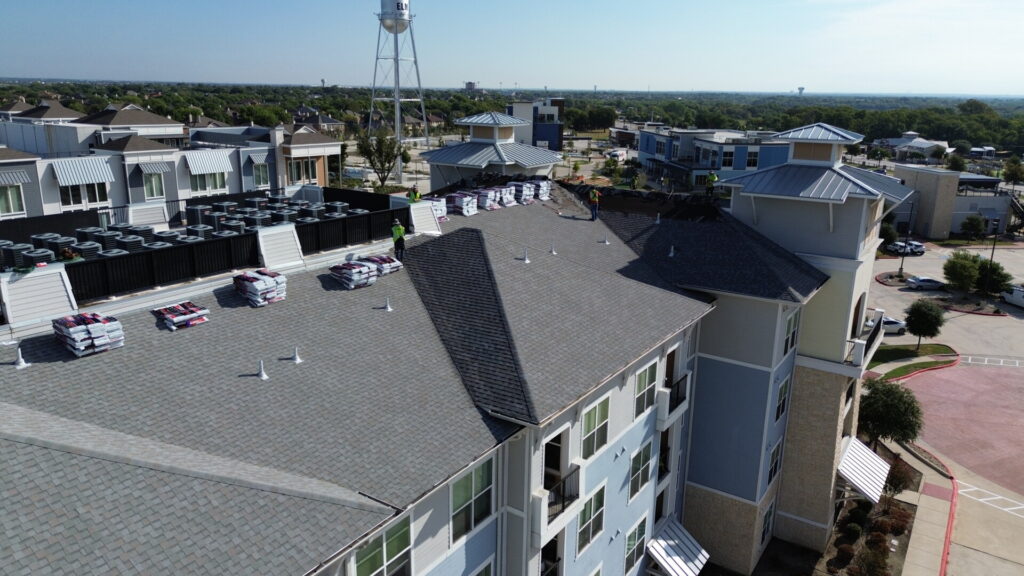
Fall Roof Maintenance Helps DFW Properties Prepare for Winter
Fall is an especially useful time for roof inspections and repairs because it falls between the intense Texas summer and winter’s colder conditions. The National Roofing Contractors Association (NRCA) recommends roof inspections at least twice each year, preferably in spring and fall, as well as after severe weather events.
That timing is particularly relevant in North Texas. According to the National Weather Service, spring and fall are typically the wettest periods of the year in the Dallas-Fort Worth area. The region also experiences large hail, damaging winds, flooding, and tornadoes. In winter, DFW can experience periods of rain and drizzle along with occasional wintry precipitation.
Addressing roof deficiencies in fall can therefore help multifamily properties prepare for the next round of challenging weather.
What Roof Problems Should DFW Property Managers Look for in the Fall?
Property managers should prioritize signs of storm damage, active or previous leaks, damaged roofing materials, deteriorated flashing, and drainage problems during a fall roof inspection. Problems that appear minor from the ground can allow water into the roof assembly when rain or changing temperatures put additional stress on the system.
Depending on the property’s roofing system, warning signs may include:
- Missing, loose, cracked, or damaged shingles
- Punctures, splits, or deterioration in roof membranes
- Loose or damaged flashing around penetrations
- Ponding water or slow-draining roof areas
- Clogged gutters, drains, or downspouts
- Damaged roof edges
- Water stains on ceilings or walls
- Loose roofing components following high winds
- Evidence of previous leaks around HVAC equipment or other penetrations
NRCA guidance specifically recommends checking for deterioration, removing accumulated debris, and paying attention to valleys, gutters, and roof drains where materials can collect and restrict drainage.
Why Is Fall Roof Repair Important After a DFW Summer?
Fall roof repair gives property managers an opportunity to identify damage or deterioration caused by summer heat and severe weather before those vulnerabilities face winter conditions.
North Texas roofs experience substantial environmental stress. Summer temperatures in DFW regularly reach the 90s and can exceed 100 degrees, according to the National Weather Service. Severe thunderstorms can also bring hail and damaging winds to the Metroplex.
After months of exposure, a professional fall inspection may uncover issues that residents or maintenance teams have not yet noticed. A small opening around flashing, for example, may not produce an obvious interior leak during dry weather but can become a source of moisture intrusion during subsequent rainfall.
This is why waiting for a resident to report a leak is not an ideal roof management strategy. Proactive inspections allow managers to identify deficiencies before interior damage makes the problem obvious.
Can Fall Roof Repairs Help Reduce Long-Term Property Costs?
Yes. Timely fall repairs can reduce the risk that localized roofing problems develop into larger repairs involving insulation, decking, ceilings, walls, or interior finishes.
NRCA identifies roof system maintenance as one of the most important factors, after proper installation, in determining a roof system’s lifespan and cost. Its guidance also notes that preventive maintenance provides a planned approach to roof management and future roof-related expenses.
For multifamily owners, that planning has practical benefits. Proactive roof maintenance can help:
- Extend the useful life of existing roofing components
- Reduce the likelihood of emergency leak calls
- Limit water damage to occupied units and common areas
- Support more predictable capital planning
- Identify repair needs before they expand
- Reduce disruption for residents and onsite staff
A fall roof repair program does not mean every aging roof needs replacement. A qualified roofing professional can help determine whether localized repairs, maintenance, restoration, or a larger roofing project is appropriate.
How Does Roof Maintenance Affect Multifamily Residents?
A well-maintained roof helps keep apartments dry, comfortable, and protected from weather-related damage, making roofing maintenance an important part of resident care.
Roof leaks can create problems beyond the roof itself. Water may damage ceilings, walls, insulation, flooring, or residents’ belongings. Repairs that become emergencies can also require access to occupied units and create avoidable disruptions.
For property managers overseeing large apartment communities in Dallas, Fort Worth, Arlington, Plano, Irving, and surrounding DFW communities, proactive maintenance is especially valuable. Addressing multiple repair needs through a planned fall maintenance program can be more manageable than responding to individual emergencies throughout the winter.
Fall Roof Repair Checklist for DFW Multifamily Properties
Before winter arrives, property managers should consider scheduling a professional inspection and reviewing previous maintenance records and leak reports. Pay particular attention to areas with a history of water intrusion.
A fall roofing assessment should evaluate drainage components, flashing, penetrations, roof edges, visible roofing materials, previous repair areas, and other vulnerable locations appropriate for the specific roofing system. After the inspection, prioritize active leaks and conditions that threaten the roof’s ability to remain watertight.
NRCA recommends retaining an experienced roofing contractor promptly when an inspection reveals repairs are needed rather than having inexperienced property personnel attempt roofing repairs.
Frequently Asked Questions About Fall Roof Repair in DFW
When should a multifamily roof be inspected?
NRCA recommends inspecting roof systems at least twice per year, preferably in spring and fall, and after severe weather such as hailstorms. Properties with older roofs or recurring problems may require more frequent professional evaluation.
Should a roof be repaired if it is not currently leaking?
Yes. Missing materials, deteriorated flashing, membrane damage, drainage issues, and other deficiencies can exist before an interior leak becomes visible. Repairing identified vulnerabilities early can help prevent moisture intrusion and more extensive damage.
Does every damaged multifamily roof need to be replaced?
No. The appropriate solution depends on the roof’s age, condition, roofing system, damage severity, and repair history. A professional inspection can help determine whether targeted repairs, restoration, or replacement offers the best long-term approach.
Why clean roof drains and gutters during fall maintenance?
Leaves and debris can restrict drainage and allow water to accumulate in vulnerable areas. NRCA specifically recommends removing debris and keeping roof drains clear as part of routine roof maintenance.
Ready for Fall Roof Repair in DFW?
Do not wait for a winter leak to reveal a problem that could have been addressed in the fall. JNL Roofing helps DFW multifamily property owners and managers identify roofing concerns, prioritize repairs, and protect their communities with proactive maintenance solutions. Contact JNL Roofing to schedule a roofing assessment today.